The Atelier
Fabrication of Zellige
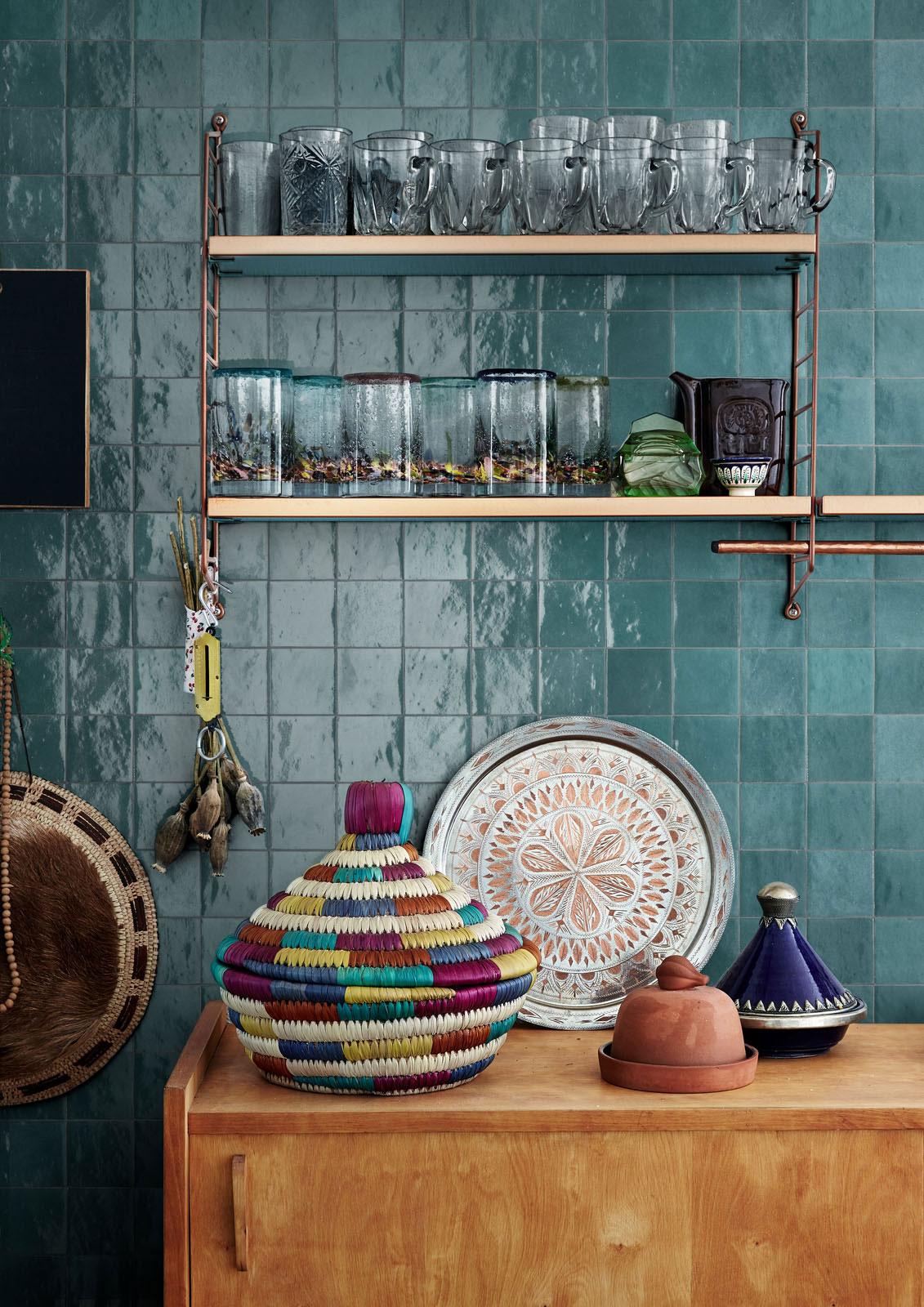
Moroccan zellige is a decorative art made from glazed terracotta tiles, hand-cut and assembled into geometric compositions. Every piece bears the trace of the artisan's gesture. Its subtle variations in color, surface, and thickness create a living décor that reacts to light.
Far more than a cladding, zellige belongs to Morocco's architectural heritage. For centuries it has adorned palaces, madrasas, fountains, mosques, and traditional homes. Today it also finds its place in contemporary interiors, hotels, and bespoke architectural projects.
01 · The Word
What is Zellige?
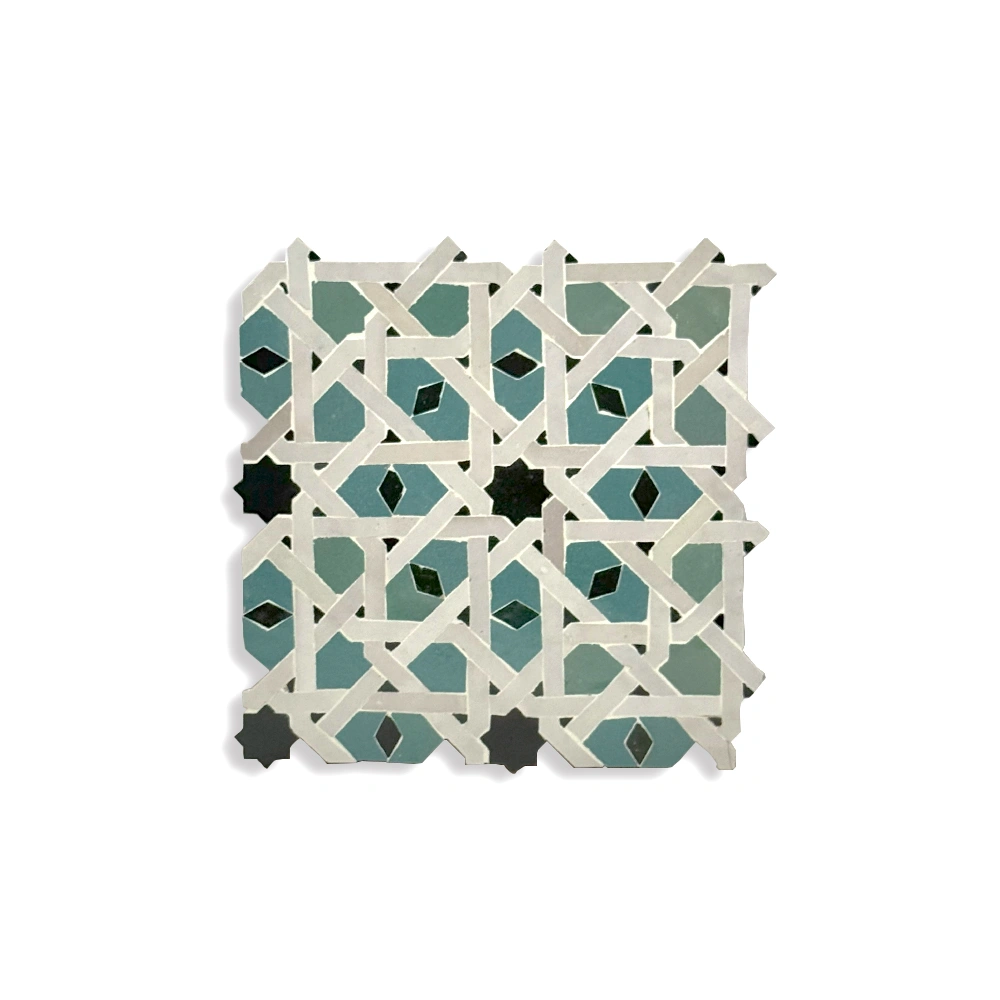
The word zellige designates a mosaic made of glazed terracotta tesserae. The artisan first makes square tiles, then cuts them into stars, triangles, lozenges, crosses, and other shapes. These elements interlock to form motifs of great precision.
The appearance of zellige depends on several factors: the nature of the clay, the preparation of the clay, the thickness of the tile, the glaze, the temperature of the kiln, and the position of the pieces during firing. This manual fabrication explains why two tiles are never perfectly identical.
02 · History
A Story Tied to Moroccan Architecture
Ceramic geometric décor developed in Morocco during the Middle Ages, following the artistic traditions of the Islamic West. Between the 12th and 13th centuries, motifs gradually became more complex and took a prominent place in religious and palatial architecture.
In the 14th century, the Merinid dynasty contributed greatly to the refinement of zellige. The Bou Inania madrasa in Fes, built around 1350, preserves remarkable examples of polychrome mosaic combined with carved wood and chiseled plaster. Fes thus became one of the main centers for the transmission of this craft.
Over the centuries, zellige has accompanied the evolution of Moroccan architecture. It dresses wainscots, floors, basins, columns, and patios. This tradition continues in more recent monuments, including the Hassan II Mosque in Casablanca, while preserving the fundamental principles of the artisan's work.
03 · Fabrication
The Stages of Fabrication
The fabrication of zellige relies on a succession of manual operations. The quality of the final result depends on mastering each stage, from the preparation of the clay to the assembly of the motif.
Preparation of the Clay
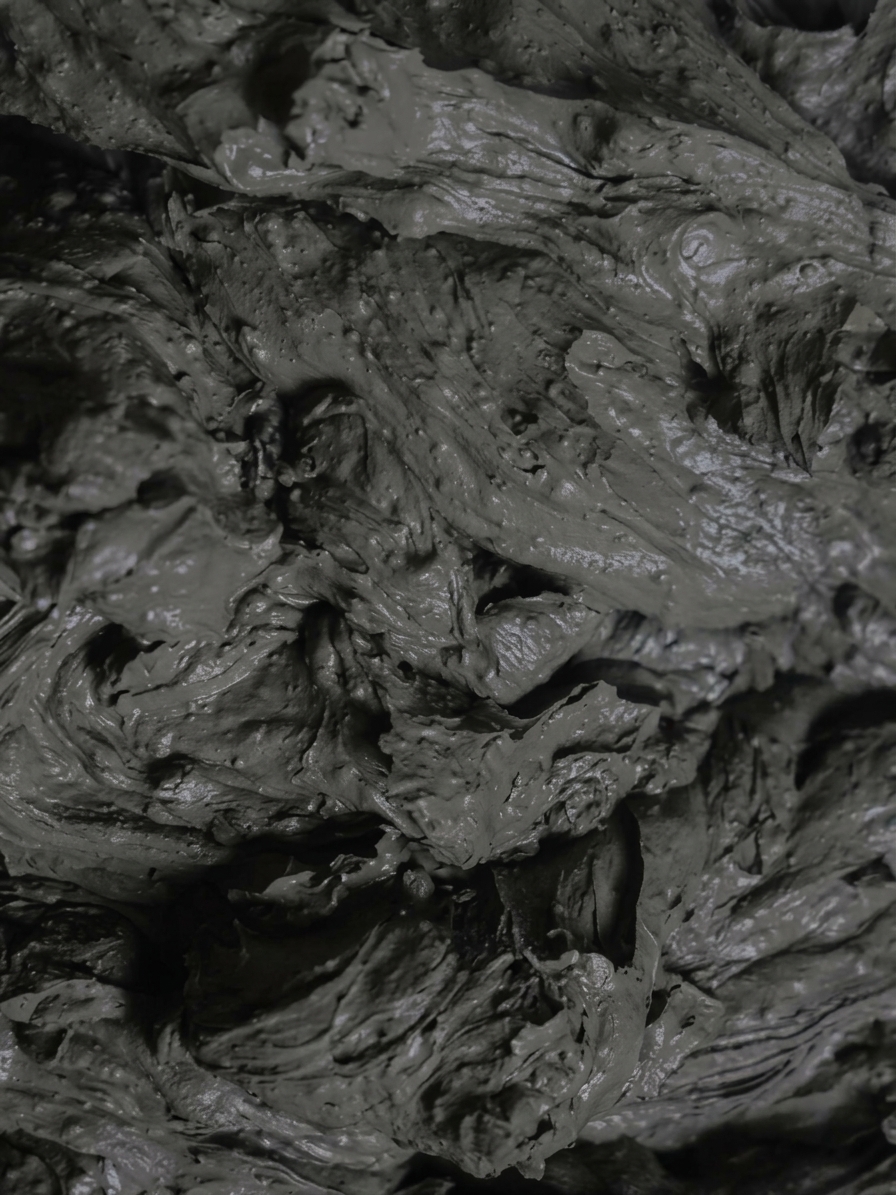
The artisan selects the clay, cleans it, and mixes it with water. He kneads it until he obtains a homogeneous, supple material, free of the impurities that could weaken the tile.
Shaping
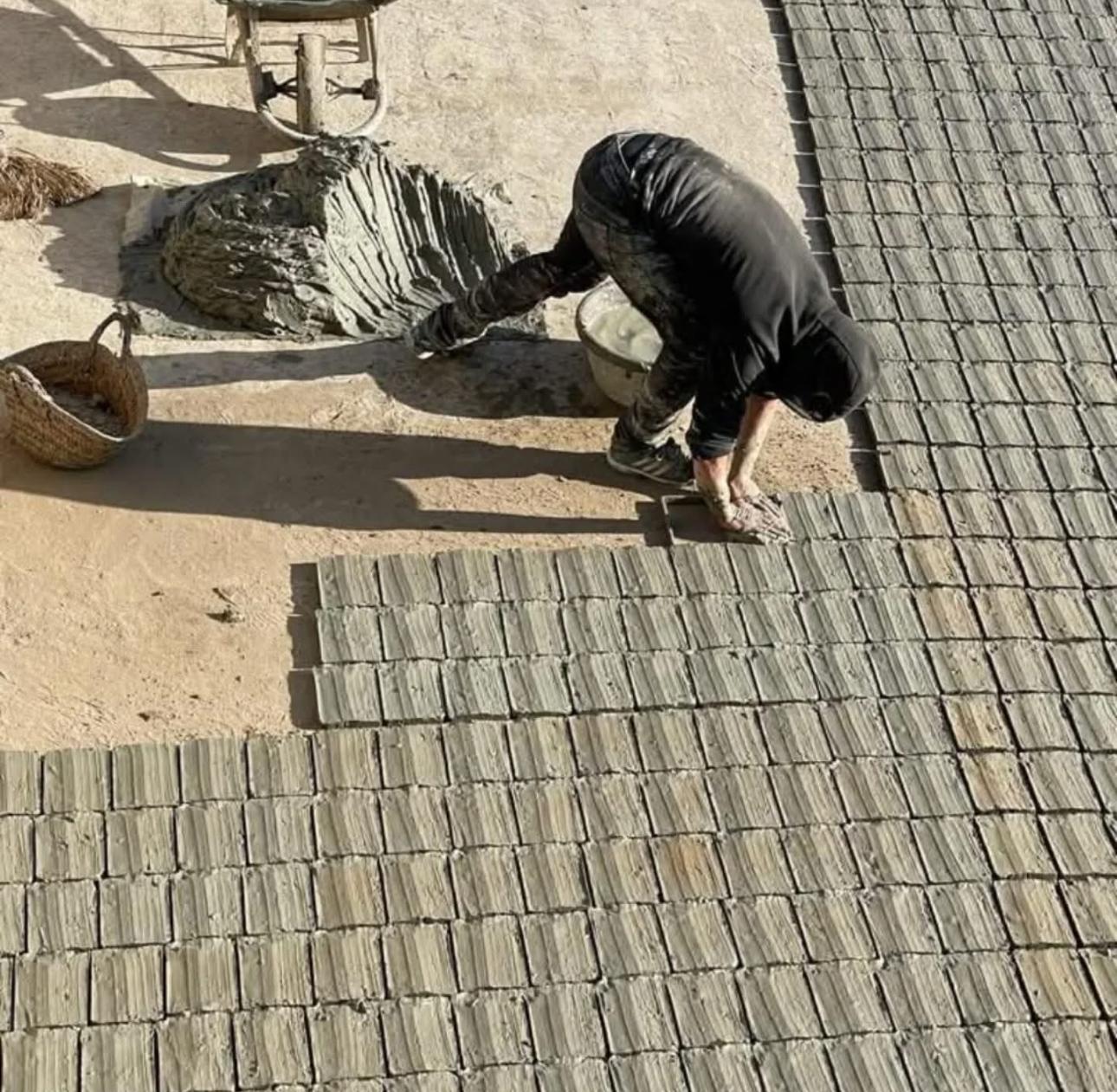
The clay becomes a slab of regular thickness. The artisan then cuts square tiles using a template. He checks their shape and surface before laying them out to dry.
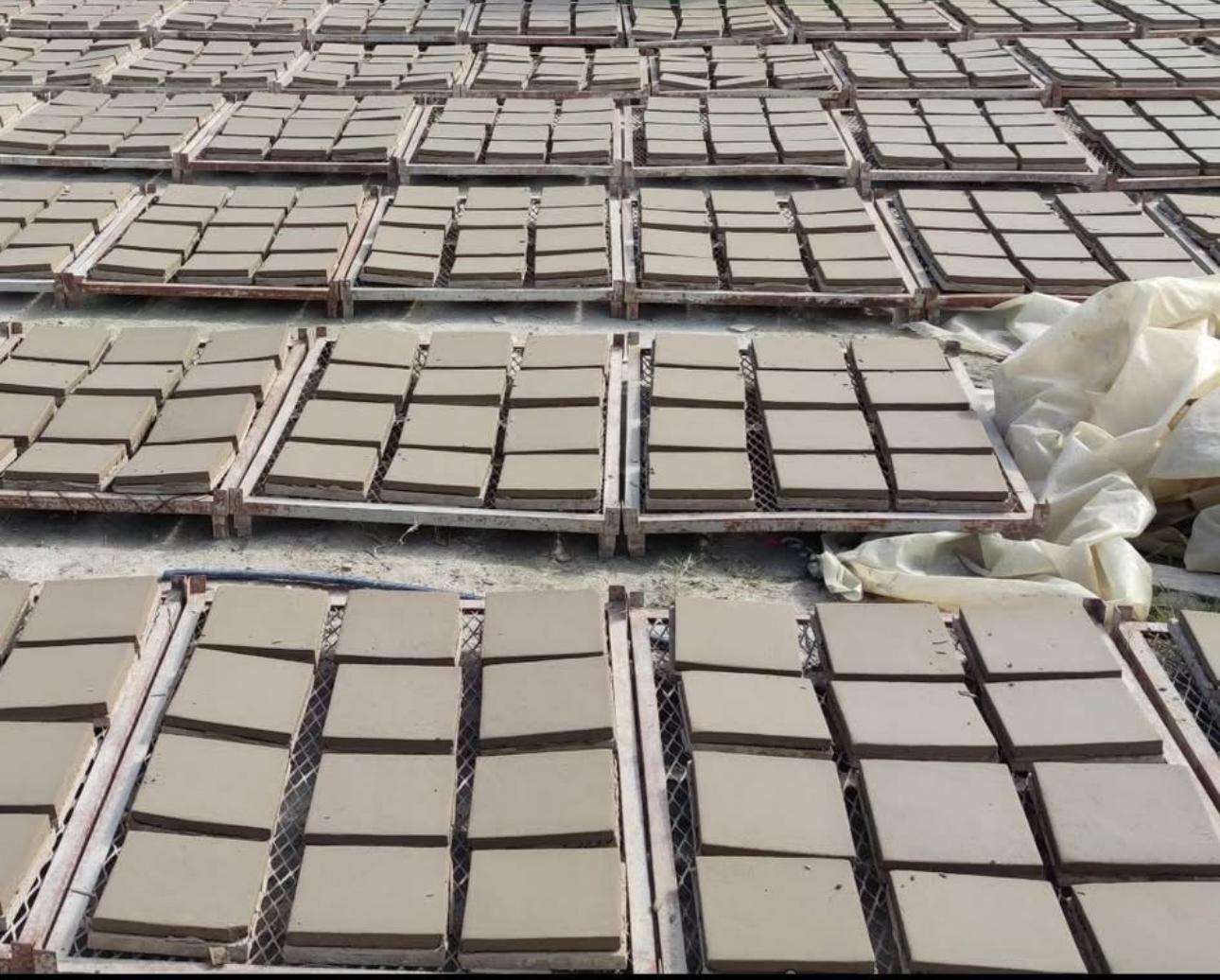
Drying
The tiles dry slowly so that moisture escapes progressively. A well-controlled drying limits cracks and deformations before firing.
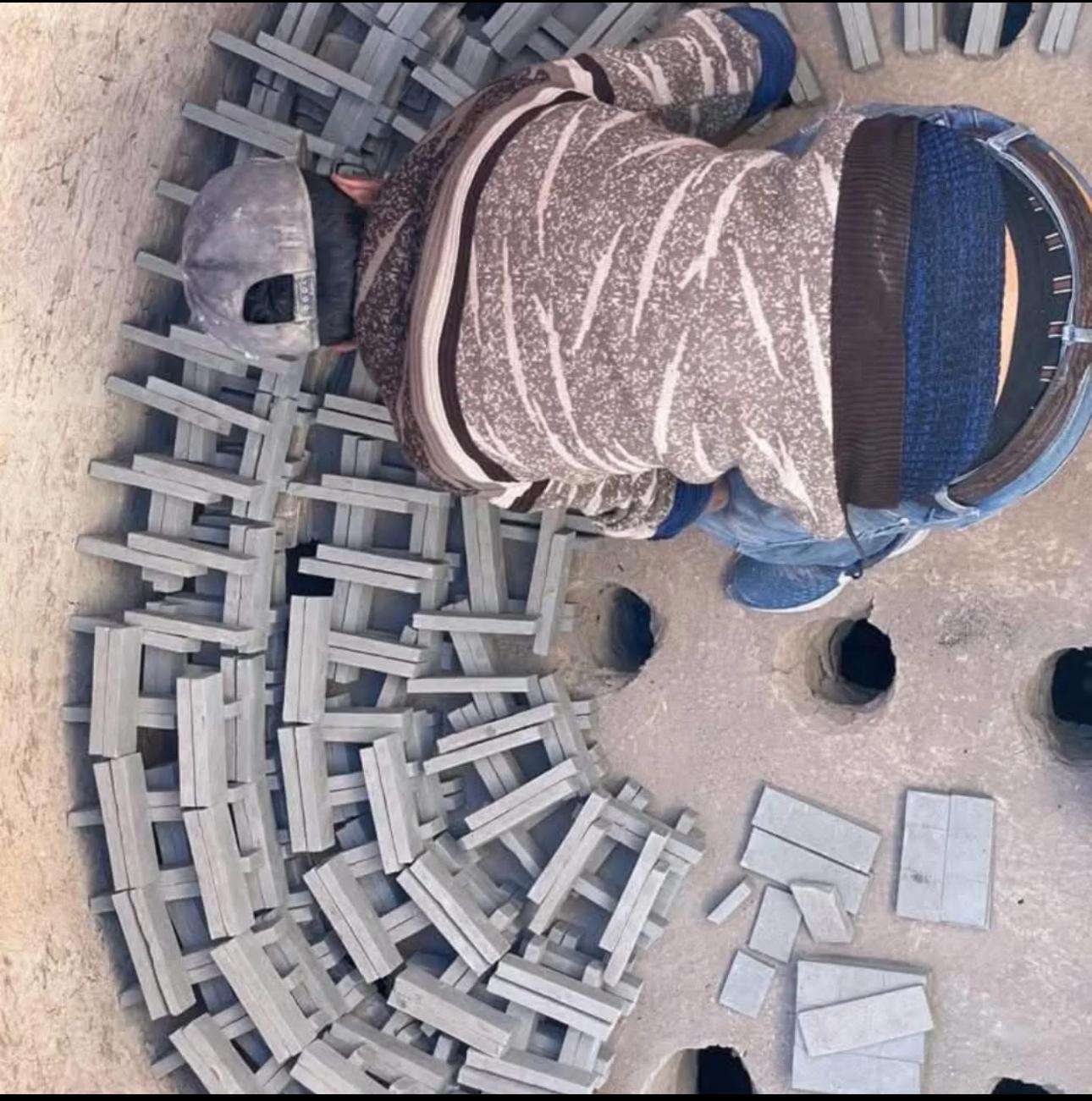
First Firing
The dry tiles enter the kiln. The heat transforms the clay into a solid terracotta. After cooling, the artisans inspect the pieces and set aside those with major defects.
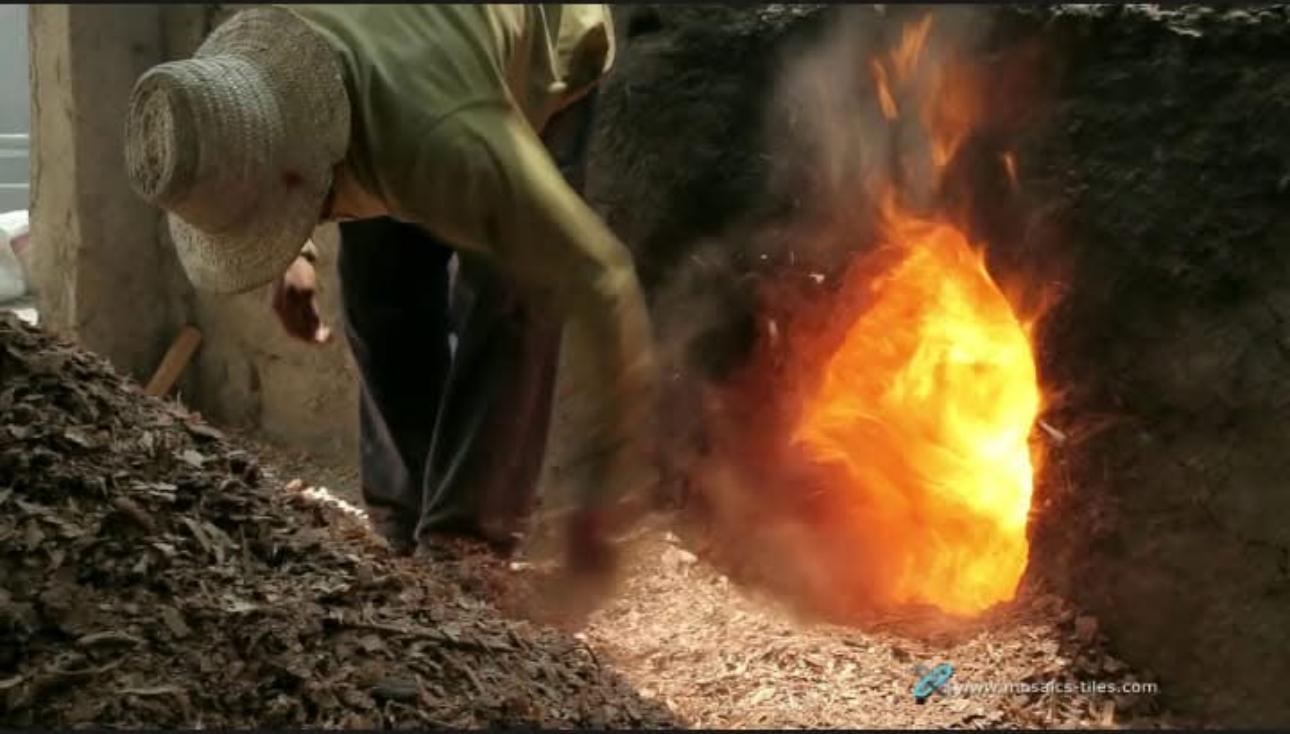
Glazing & Second Firing
The artisan applies the glaze to the visible face of the tile. He may use deep hues such as blue, green, white, honey, or black. A new firing vitrifies the surface and reveals the color. The natural reactions in the kiln produce the nuances that characterize true zellige.
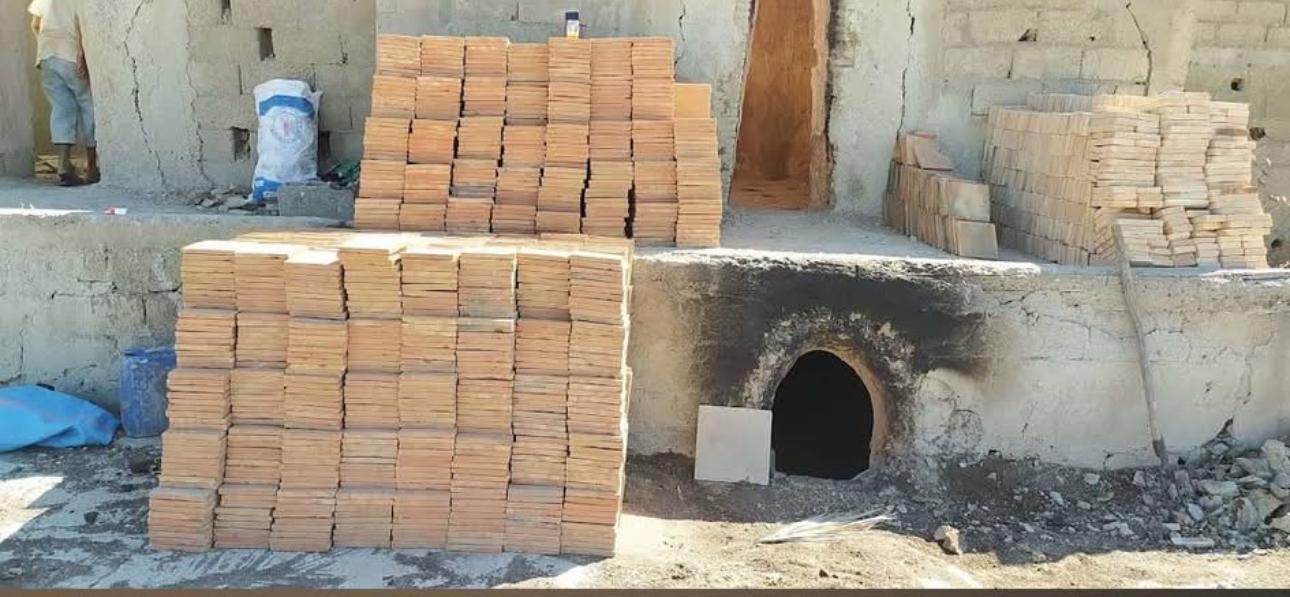
Manual Cutting
The maâlem, master artisan, traces the shapes required by the motif. Using a suitable hammer, he cuts the glazed tiles into small tesserae. The gesture must remain precise to preserve the glazed face and obtain clean edges.
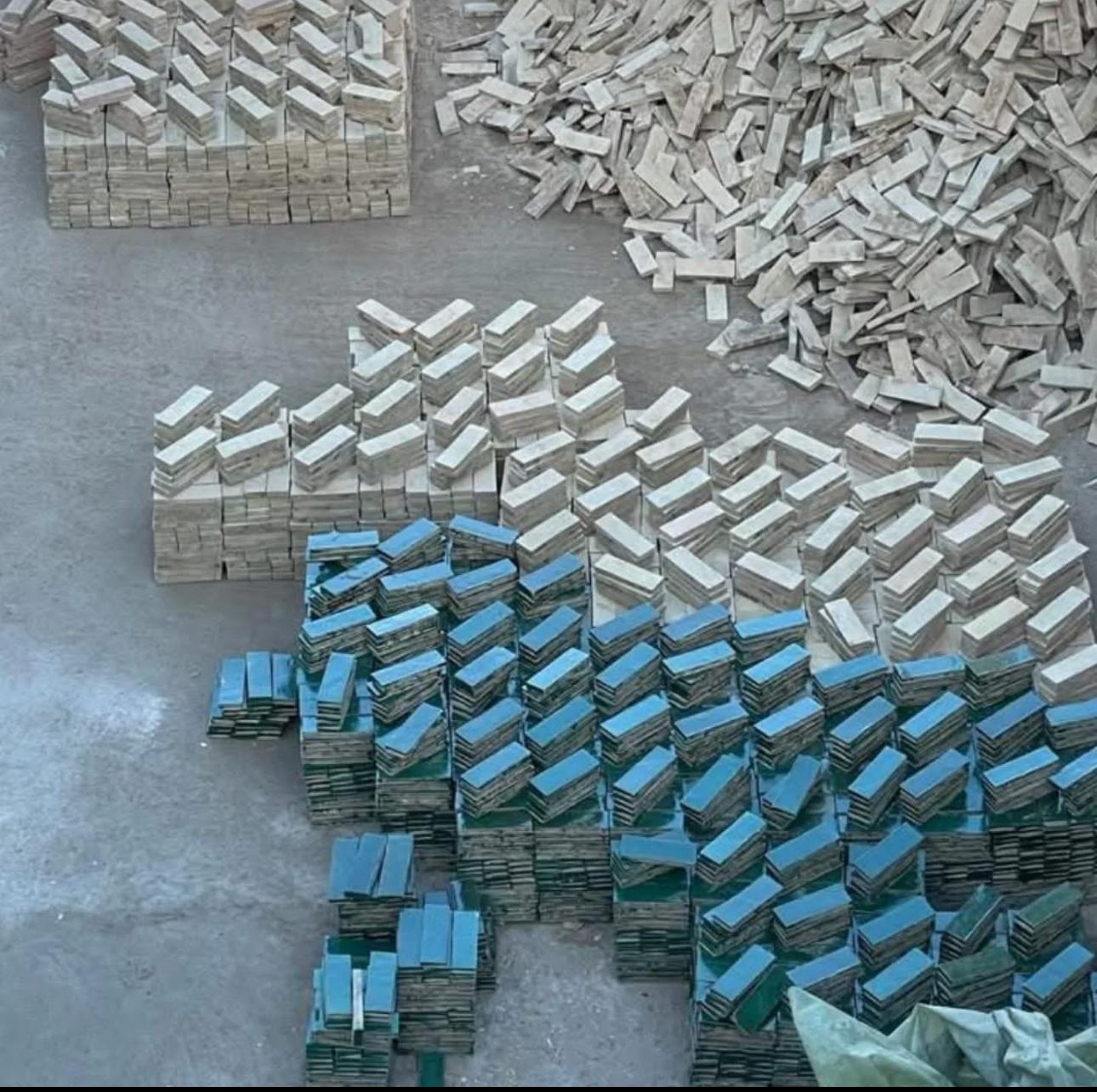
Assembly of the Motif
The tesserae are placed with the glazed face down following a geometric drawing. The artisan controls the alignment, the rhythm of colors, and the regularity of the pattern. He then pours a mortar onto the back to solidify the panel. After drying, the décor can be turned over and installed.
04 · Geometry
Geometry and the Role of the Maâlem
Geometry is the language of zellige. Motifs are built from axes, rotations, and repetitions. The central star often organizes the composition, while secondary shapes ensure the continuity of the drawing.
The maâlem masters material, color, and geometry at once. His experience lets him anticipate the behavior of the clay, correct a cut, and adapt a motif to the exact dimensions of a wall, a fountain, or a floor. This knowledge is traditionally passed on through apprenticeship and practice in the workshop.
05 · Material
A Naturally Unique Matter
The irregularities of zellige are not industrial defects — they bear witness to its handmade fabrication. The subtle shade variations give depth to the décor, while differences in surface make the light vibrate.
Each installation therefore has its own character. Even when a motif follows a precise geometry, the result retains a warm and human presence that mechanical production does not reproduce in the same way.
06 · Projects
Zellige in Contemporary Projects
Today zellige is used in kitchens, bathrooms, patios, entrances, restaurants, hotels, and commercial spaces. It can cover a large surface or become a decorative detail that draws the eye.
Architects and designers pair traditional motifs with contemporary lines. They play with formats, restrained palettes, and bespoke compositions, while preserving the richness of the material and the artisan's gesture.
07 · Craftsmanship
S & A PRESTIGE and the Valorization of Craftsmanship
S & A PRESTIGE presents Moroccan zellige as living heritage. The company highlights the work of the artisans, the precision of the motifs, and the diversity of possible applications for residential and professional projects.
On a website, this story can be complemented by a gallery of works, details of materials, examples of colors, and a presentation of the possibilities for bespoke fabrication. The visitor thus understands the origin of the product, the stages of its creation, and the value of manual work.
"Moroccan zellige unites earth, fire, color, and geometry. Its fabrication demands patience and great precision. Each panel tells the story of a craft handed down for centuries and continually adapted to the needs of architecture."
Choosing zellige means integrating into a project an authentic material, shaped by hand and deeply tied to Moroccan culture.
— The S & A Prestige Atelier